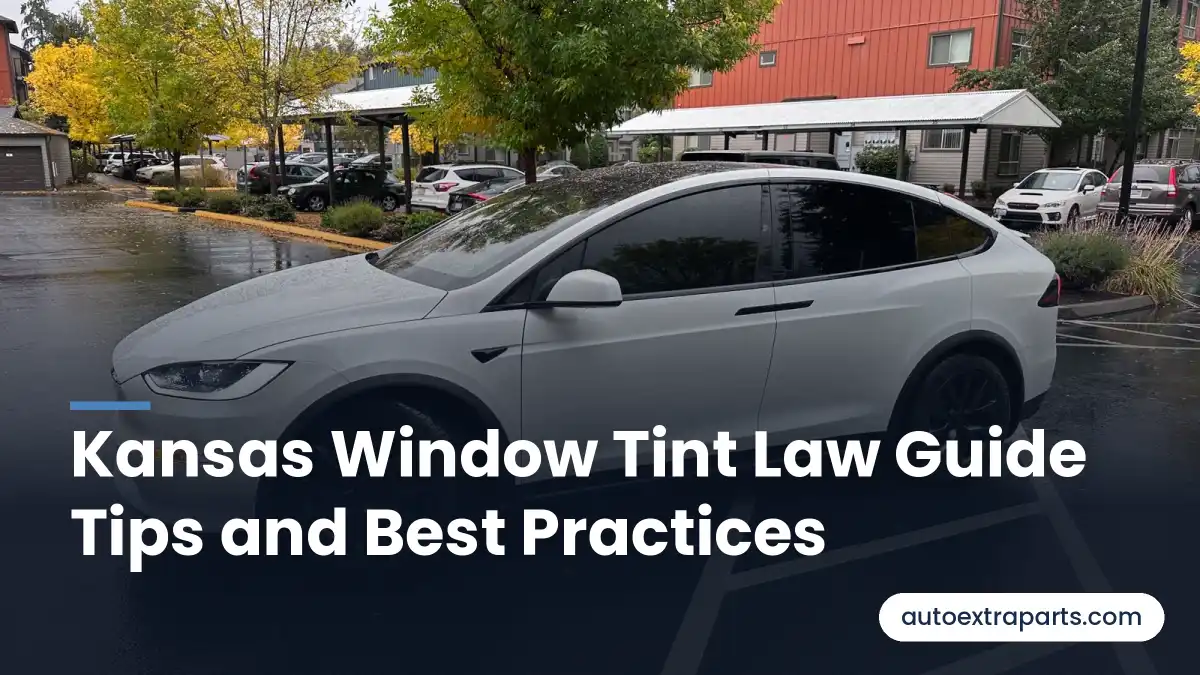
Kansas Window Tint Law Guide Tips and Best Practices
As an Amazon Associate we earn from qualifying purchases. Guides are for general information; always check your owner's manual and consult a qualified mechanic when unsure.
Driving in Kansas means you need to know the rules for window tint. The state sets clear limits. These limits keep drivers safe and eyes protected. A Kansas Window Tint Law Guide helps you understand those limits. It explains what is legal and what is not. You want to avoid a ticket.
You also want to pass your next inspection. This guide breaks down the key parts of Kansas law. We will look at the rules for each window. We will also cover medical exemptions and tint materials. Let us walk through what you need to know. Always follow official safety and maintenance guidelines for best results.
Decoding Kansas Statute 8-1750: The Legal Limits for Every Window
Kansas law sets strict limits for tint darkness. The rules apply to sedans, SUVs, and vans. The state uses Visible Light Transmission (VLT) to measure tint. VLT is the percent of light that passes through your glass. A lower VLT means a darker tint.
The law says you must keep a certain VLT on each window. This ensures enough light gets in for safe driving. You can check the full text of K.S.A. 8-1750 at the Kansas Legislature website.
The law also sets rules for tint reflection. Reflective tint can blind other drivers. Kansas limits how much reflection is allowed. The rules also cover the AS-1 line. This is the line on your windshield.
Tint above this line is often illegal. You must check your tint against these rules. A Kansas Window Tint Law Guide helps you do this right. Here are the core limits you need to know.
- Windshield Tint: Must allow over 70% of light in. Non-reflective tint is allowed on the top strip.
- Front Side Windows: Must allow over 35% of light. Darker tints fail inspection in Kansas.
- Back Side Windows: Can be darker on sedans. SUVs and vans have different rules below.
- Rear Window: Must have dual side mirrors if tinted dark. This applies to sedans only.
Vlt Percentages Explained: Sedan, Suv, and Van Tint Rules in Kansas
VLT percentages change based on your vehicle type. A sedan has different rules than an SUV. You must match the tint to your car class. The Kansas statute groups passenger vehicles into three types.
Each type has its own VLT limits. Knowing your vehicle type helps you pick the right film. It also keeps you from getting a ticket. A Kansas Window Tint Law Guide breaks this down by vehicle class.
For sedans, the front windows need a higher VLT. The back windows can go darker. SUVs and vans have more flexibility. Their rear windows can use very dark film. But you must still follow the reflection rules.
Tint meters at inspection stations measure VLT precisely. They check each window with a calibrated device. If your tint is too dark, you will fail. Here is a quick look at the VLT rules by vehicle type.
- Sedan Front Sides: Must stay above 35% VLT for legal tint on the driver and passenger doors.
- Sedan Back Sides: Can drop to 35% VLT or lower on the rear passenger doors.
- SUV Front Sides: Follow the same 35% VLT rule as sedans for the front doors.
- SUV Back Sides: Can use any darkness on rear doors and the rear window.
Medical Exemptions and Special Permits: How to File the Kansas Form Correctly
Some people need darker tint for medical reasons. Kansas allows a medical exemption for this. The exemption is not auto. You must file the right form with the state. The Kansas DMV uses form KS-DMV-123 for this request.
You will need a letter from a licensed doctor. The letter must explain your medical condition. It must also state why standard tint limits are a problem. This can include severe light sensitivity or skin disorders.
The exemption form goes to the Kansas Department of Revenue. They review the request and issue a permit if approved. The permit must stay in your vehicle at all times. You show it if an officer asks.
Without the permit, you face the same fines as any other violation. A Kansas Window Tint Law Guide will tell you to get the form early. Do not wait until your inspection is scheduled. Start the process weeks before you need it.
- Doctor’s Letter: Must be on official letterhead and state your diagnosis clearly.
- KS-DMV-123 Form: Fill out every section. Missing info causes delays or denials.
- Permit Display: Keep the permit on your dashboard or visor.
- Renewal Dates: Exemptions expire. You must file for renewal before the date.
Tint Materials That Pass Inspection: Ceramic, Metallic, and Reflective Restrictions
Not all tint films are legal in Kansas. The material matters as much as the darkness. Kansas law restricts certain types of tint. Metallic and reflective films are the main concerns.
These films can create glare for other drivers. They also interfere with police and emergency radio signals. The state sets strict limits on how reflective a film can be. You must check the spec sheet before you buy.
Ceramic tint is a popular choice in Kansas. It blocks heat without adding metal. This means it often passes inspection easily. Ceramic films also do not fade as fast.
They hold their color longer than cheaper dyes. When you pick a film, ask the installer about Kansas VLT standards. A good Kansas Window Tint Law Guide will point you to compliant brands. Here is what you need to know about allowed materials. For complementary picks and expert testing advice, see our guide on How to Master Florida Window Tint Law Step by Step.
- Ceramic Films: Non-metallic and non-reflective. They block heat and pass Kansas inspection.
- Metallic Films: Often fail the reflection test. Kansas limits reflectivity to a low percent.
- Dyed Films: Basic and low-cost. But they fade faster and may not meet VLT long-term.
- Hybrid Films: Mix ceramic and metal. Check the reflectivity rating before you choose.
Enforcement, Fines, and Failed Inspection: What Kansas Officers Actually Measure
Kansas officers use tint meters during traffic stops. These meters measure the actual VLT of your glass. They check each window one by one. If a window is too dark, you get a citation.
The fine for a tint violation in Kansas is set by statute. It can also add points to your driving record. Failed inspections happen often at annual safety checks. The station uses a calibrated tint meter to test you.
Enforcement can vary by county. Sedgwick County and Johnson County both take tint seriously. Officers look for tint that is obviously too dark first. They then use the meter to confirm the reading. A first-time ticket is a civil fine.
But repeated violations can lead to higher costs. You should also know that removing illegal tint helps. It can reduce your fine or help you pass re-inspection. Here are the key points about how Kansas handles tint violations.
- Tint Meter Test: Officers measure VLT on each window with a calibrated device.
- Fine Amount: A first violation carries a set fine under K.S.A. 8-1750.
- Re-Inspection: You can fix the tint and re-test to pass your inspection.
- County Differences: Sedgwick and Johnson County offices enforce the same law but may vary in approach.
Practical Methods for Kansas Window Tint Law Guide
A Kansas Window Tint Law Guide is only useful if you follow it. Start by checking your current tint VLT. You can buy a handheld tint meter for this. They cost under fifty dollars at auto parts stores. Test each window before you visit the inspection station.
This gives you time to fix any problems. You can also ask your tint shop for a compliance certificate. Many shops in Kansas provide this with the install. Keep that paper with your vehicle documents.
Next, know your vehicle class. Sedans, SUVs, and vans each have their own rules. Do not assume your friend’s SUV tint is legal for your sedan. The VLT limits differ by vehicle type. Finally, keep your paperwork in order.
If you have a medical exemption, carry the permit. If you have a compliance certificate, keep it in the glove box. These simple steps save you time and money. They also keep you on the right side of the law.
- Buy a Meter: Test your own tint before the inspection station visit.
- Check Vehicle Class: Sedan rules differ from SUV and van rules in Kansas.
- Keep Receipts: Your tint shop receipt proves the film type and VLT.
- Carry Exemption: Medical permit holders must keep KS-DMV-123 in the vehicle.
Quick Reference: Kansas Window Tint Law Compliance Checklist
Use this checklist to stay compliant in Kansas. Print it out and keep it in your glove box. It covers the main rules for tint darkness, reflection, and materials. Check each item before your next inspection. This simple list helps you avoid surprises at the station. It also saves you from a costly ticket on the road.
- Windshield VLT: Confirm over 70% light transmission on your windshield glass.
- Front Side VLT: Check over 35% VLT on both driver and passenger front doors.
- Back Side VLT: Check your vehicle class for the correct sedan or SUV rule.
- Reflectivity Limit: Make sure your tint film is not over the allowed reflectivity percent.
- Medical Permit: Carry the KS-DMV-123 form if you have a filed exemption.
Kansas Window Tint Law Guide: Practical Steps to Stay Compliant and Avoid Penalties
Start with a plan before you tint your windows. Pick a shop that knows Kansas rules well. Ask them to show you the VLT spec sheet. A good installer will check your window type first. They’ll match the right film to your car model. Don’t let anyone rush you into a choice.
After installation, ask for a certification sticker. Place it on the driver’s side window. Keep the receipt in a safe spot. You need both if an officer stops you. We’ve seen folks lose disputes simply because they had no paper trail. A few minutes of prep saves big headaches later. For complementary picks and expert testing advice, see our guide on California Window Tint Law Explained for Beginners.
- Shop Choice: Pick an installer who shows you the Kansas VLT chart before you sign.
- Film Spec Sheet: Ask for written proof of the film’s VLT rating and reflectivity level.
- Certification Sticker: Place it on the driver’s side window after a compliant install.
- Receipt Storage: Keep your tint invoice in the glove box with your registration.
- Pre-Inspection Check: Use a handheld tint meter to test your windows before a state inspection.
Comparison: Sedan vs. Suv Tint Rules in Kansas
| Vehicle Type | Windshield | Front Side | Rear Side | Rear Window |
|---|---|---|---|---|
| Sedan | AS-1 line only | 35% VLT min | 35% VLT min | 35% VLT min |
| SUV | AS-1 line only | 35% VLT min | 35% VLT min | Any VLT allowed |
SUV rear windows have more freedom. Sedan owners must watch all glass closely. The AS-1 line rule stays the same for both. Reflectivity limits apply equally too. Always check the latest Kansas statute for updates. Rules can shift with new legislative sessions.
Frequently Asked Questions About Kansas Window Tint Laws
Can I Tint My Windshield in Kansas?
You can tint the top portion above the AS-1 line. The rest of the windshield must stay clear. Kansas law draws a firm line here. No tint film goes below that mark on a windshield. Stay on the safe side of the line.
What Happens If I Get Pulled Over for Illegal Tint?
An officer will use a tint meter to check your glass. You’ll likely receive a citation on the spot. The fine can hit around $150 for a first offense. You may also face a failed inspection. Fix the tint before your next registration renewal.
Do I Need a Medical Exemption for Dark Tint?
Yes, if your tint falls below the legal VLT limit. You must file the KS-DMV-123 form with the state. A licensed physician must sign the form. Keep a copy in your vehicle at all times. Police will ask to see it during a stop.
Is Ceramic Tint Legal in Kansas?
Ceramic tint is legal if it meets the VLT and reflectivity limits. It blocks heat without adding metal to the film. That means it won’t interfere with electronics. Many Kansas shops carry ceramic options that pass state inspection with ease.
How Often Do Kansas Tint Laws Change?
Kansas updates its tint statutes during legislative sessions. The 2024 amendment brought clearer VLT guidance for certain vehicles. Check the Kansas Legislature website each year before you tint. Staying current keeps you compliant and avoids surprise fines.
Final Thoughts and Next Steps
The Kansas Window Tint Law Guide gives you clear rules to follow. You now know the VLT limits, material rules, and fine risks. That knowledge puts you in charge of your next tint job. Stay compliant, and you’ll skip the headache of a traffic ticket. A little prep goes a long way on Kansas roads.
Keep this guide handy when you visit a tint shop. Print the checklist or save it on your phone. Ask your installer every question you have. A good pro will welcome your diligence. When in doubt, call your local Kansas Highway Patrol office. They can confirm current rules for your specific vehicle. Safe driving starts with clear, legal glass.



3 Comments