Does Ferrari Make Automatic Cars for Beginners
As an Amazon Associate we earn from qualifying purchases. Guides are for general information; always check your owner's manual and consult a qualified mechanic when unsure.
Does Ferrari Make Automatic Cars? That question sparks big debate among car lovers. Ferrari builds fast, fun machines that thrill drivers. Many fans still link the brand to old-school manual gearboxes. But times have changed. The company now offers automated systems in many models. So, what does that mean for you?
The short answer is yes. Ferrari does make auto cars. But the tech is not like your daily commute vehicle. The brand uses a dual-clutch system. It shifts gears in milliseconds. Always follow official safety and maintenance guidelines for best results.
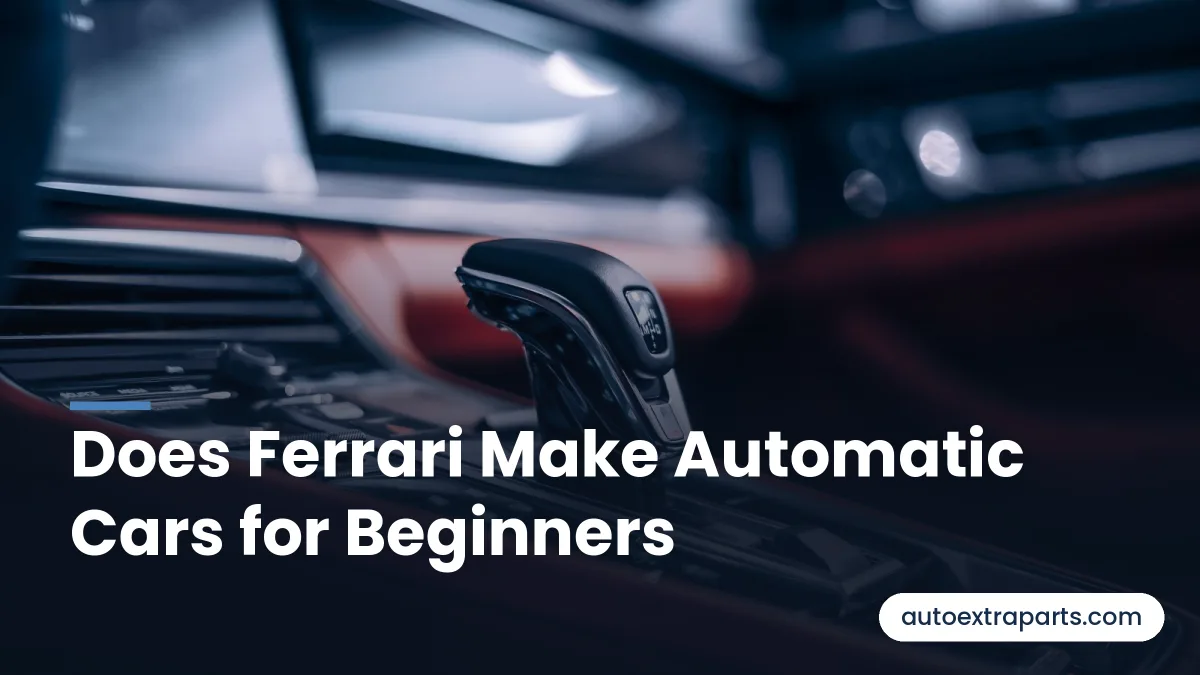
You get speed and ease. You do not lose the sporty feel. This setup goes by the name Ferrari Dual-Clutch Transmission. It uses paddle shifters behind the steering wheel. You can still change gears by hand.
That blend of power and control sets Ferrari apart. The focus keyword here is does Ferrari make auto cars. Car makers add automatics for many reasons. Comfort matters in stop-and-go traffic. Smooth launches help with acceleration.
But Ferrari adds its own twist. The system keeps you tied to the road. It feels more like a manual than a traditional auto. That is why the debate lives on.
Does Ferrari Make Automatic Cars: The Dual-Clutch Revolution Explained
Ferrari made its name with manual gearboxes for decades. The roar of a V12 engine paired with a H-pattern shifter defined the brand. But the company saw a shift in buyer needs. Many new drivers wanted ease without losing thrill. So Ferrari turned to automated tech.
The result is the F1 DCT system. It uses two clutches to pre-select the next gear. When you shift, one clutch engages while the other pre-loads. This cuts shift times to fractions of a second. You feel the surge without a pause.
Today, most new Ferrari models use this setup. The Ferrari 812 Superfast uses it. The Roma and Portofino M rely on it too. Even hybrid cars like the SF90 Stradale use dual-clutch tech. You can still find manual gearboxes in limited editions.
But they are rare. The auto route dominates the lineup. So does Ferrari make auto cars? Yes, and the dual-clutch system is the heart of that choice.
- Dual-Clutch System: Two clutches work in tandem to pre-select gears and give near-instant shifts.
- F1 DCT Name: The tech borrows its name from Formula 1 race car gearbox logic.
- Paddle Shifters: You can still by hand command gear changes using paddles behind the wheel.
- Ferrari 812 Superfast: This grand tourer uses the dual-clutch auto to handle its V12 power.
- No Torque Converter: Unlike old automatics, this system uses a dry-clutch design for faster response.
Ferrari’s Transmission Evolution: From Manual Dominance to Automated Gearboxes
Ferrari started with pure manual gearboxes. The 1987 F40 used a gated manual shifter. You felt every gear change through the knob. The brand stuck with manuals through the 1990s and early 2000s.
But other car makers moved toward automatics. Buyers wanted comfort in daily driving. Ferrari watched this trend closely. The company did not want to lose buyers to rivals.
The first big step came with the F1-style automated gearbox. It appeared in the 2001 Ferrari 360 Modena. This was not a full auto. It used a manual gearbox with a robotized clutch. You still shifted gears, but an electronic system did the work.
It felt raw and mechanical. The next leap came with the true dual-clutch system. Ferrari refined this tech over many years. It now shifts faster than any human could. The result is a car that feels both fast and easy to drive.
Today, the lineup is almost fully automated. The Ferrari Portofino M uses a turbo V8 with dual-clutch auto. The 296 GTB pairs a V6 hybrid with the same system. Even the entry-level Roma uses this approach.
You can still find a manual in the Ferrari 296 GTB if you look hard. But it is the exception. The trend is clear. Ferrari bets on automated gearboxes for the future.
- F40 Manual Era: The 1987 supercar used a gated manual shifter and pure driver control.
- 360 Modena Shift: In 2001, Ferrari introduced a robotized manual gearbox that started the change.
- Dual-Clutch Era: The current F1 DCT system gives shifts faster than any human hand could.
- Entry-Level Models: The Roma and Portofino M use automated gearboxes to attract new buyers.
- Hybrid Models: The SF90 Stradale and 296 GTB pair plug-in hybrid power with dual-clutch automatics.
How Ferrari Dual-Clutch Technology Compares to Traditional Automatic Systems
A traditional auto uses a torque converter. It connects the engine to the gearbox with fluid. This design is smooth and quiet. It works great for daily driving. But it has a delay.
The fluid needs to transfer power. That lag feels sluggish during hard acceleration. Ferrari needed a faster system. The dual-clutch solves this problem with a different approach.
Instead of a torque converter, Ferrari uses two dry clutches. One clutch handles odd gears. The other handles even gears. When you drive in third gear, the system pre-selects fourth. You pull the paddle, and the next clutch grabs instantly. For complementary picks and expert testing advice, see our guide on 3 Ton Car Jack Stands That Will Make Your Garage Safer.
There is no gap in power. The car surges forward without a pause. This is why does Ferrari make auto cars with dual-clutch tech. They want the speed of a manual with the ease of an auto.
You can feel the difference on the road. A traditional auto shifts with a slight dip in power. The dual-clutch system feels sharp and direct. It holds the engine in its power band.
You stay on the throttle through corners. The Manettino dial on the steering wheel lets you change the car’s mode. You can set it for comfort or full sport. The transmission responds to your choice instantly.
- Torque Converter Auto: Uses fluid coupling for smooth shifts. But adds slight lag during hard acceleration.
- Dual-Clutch Design: Uses two dry clutches to pre-select gears and give near-instant power transfers.
- Shift Speed: Ferrari DCT shifts in under 300 milliseconds, far faster than any traditional auto.
- Driver Control: Paddle shifters let you by hand select gears even in auto mode.
- Manettino Dial: This dial changes transmission behavior to match your driving mode choice.
The Driver Experience: Engagement vs. Convenience in Ferrari Automatic Models
So does Ferrari make auto cars that still feel raw and exciting? You bet they do. Ferrari built dual-clutch systems to keep you glued to the steering wheel. You get smooth daily drives without losing the thrill. The car shifts gears faster than any human could.
Pop the Manettino dial into Sport mode. You feel every gear change through your seat. That sharp thump tells you the gearbox is working hard. It gives you the old manual vibe without the clutch pedal. Downshifts match revs perfectly every time.
- Sport Mode: Sharp shifts and stiff suspension give you track thrills on street tires. You feel each gear drop like a hammer hitting the road.
- Comfort Mode: Smooth, soft shifts make long drives feel easy and relaxed. The car acts like a normal sedan when you want a gentle ride.
- Paddle Shifters: Aluminum paddles sit right behind your steering wheel. You grab them and change gears in one finger.
- Launch Control: Hold the brake, floor the gas, release. The tires spin just enough for a clean start. You launch hard without spinning out.
- Side Slip Control: Sensors watch your car’s angle 100 times per second. The system corrects oversteer before you even think about it.
Ferrari knows drivers want both thrill and livability. That is why they refined these systems over two decades. You can cruise to the store or race your friends. The car adapts to your mood in seconds. Does Ferrari make auto cars that feel engaging? Their dual-clutch tech proves they absolutely do.
Technical Specifications and Engineering Trade-Offs in Ferrari Automatic Transmissions
Ferrari’s auto gearboxes pack serious engineering into a small shell. Every part serves a purpose under the rear deck. The dual-clutch design uses two separate clutch packs. One handles odd gears. The other handles even gears. This lets the next gear pre-select while you drive.
That pre-selection means shifts happen in milliseconds. A traditional torque converter takes longer to engage. Ferrari traded that sloth for raw speed. You gain split-second response but lose some low-speed smoothness. Early dual-clutch cars felt rough in stop-and-go traffic. Newer units fixed most of that chatter.
- Clutch Material: Carbon-fiber discs handle high heat and fade less. They last longer than steel under track stress.
- Gear Ratios: Close ratios keep the engine in its power band. You stay on the throttle edge during fast runs.
- Cooling System: Dedicated oil coolers keep clutch temps low. Racing laps won’t overheat the gearbox on ordinary drives.
- Weight Savings: Dual-clutch units weigh less than torque converters. That lower nose weight helps cornering balance.
- Electronics Integration: The gearbox talks to the engine computer constantly. They share data to pick the perfect gear every millisecond.
Engineering trade-offs shape every decision Ferrari makes. You get speed and light weight. You give up some low-cost simplicity. But that math works for a supercar brand. These gearboxes cost more to build. They also give a driving feel no torque converter can touch.
Future Transmission Trends: Ferrari’s Hybrid and Electric Powertrain Strategy
Ferrari is pushing hard into hybrid and fully electric territory. Their new powertrains change how a car gives power. The 296 GTB pairs a V6 with an electric motor. That combo adds 162 horsepower from the motor alone. You get instant torque from zero RPM.
Electric motors change the transmission game. You often only need a single-speed gearbox. Ferrari chose a clever 8-speed dual-clutch unit instead. Why? Because the hybrid system needs complex power splitting. The gearbox manages engine and motor power flow together. It also lets you regen energy under braking. For complementary picks and expert testing advice, see our guide on 10 Seater Car Names That Make Your Family Road Trip Perfect.
- E-Differential: Electric torque vectoring sends power to the gripiest wheel. You corner flat without any mechanical limited-slip parts.
- Regen Braking: The motor slows the car and charges the battery. You ride the brake pedal less often.
- e-Manettino: A digital dial controls hybrid power modes. You pick how much electric assist you want.
- 800-Volt Architecture: High-voltage systems charge faster and run cooler. You plug in for a quick top-up between drives.
- V6 Hybrid: The engine is smaller but makes more total power. Turbocharging and electric assist replace a big V8.
Does Ferrari make auto cars in the electric era? The SF90 Stradale already answers that with an 8-speed gearbox. Future models will likely keep dual-clutch tech. Pure EVs might skip it entirely. But Ferrari’s driver-first philosophy won’t vanish. They will always pick the setup that puts you in control.
Ferrari Automatic Transmission Comparison
| Model | Transmission Type | Gears | Power Source | Key Feature |
|---|---|---|---|---|
| Ferrari Roma | Dual-Clutch (F1 DCT) | 8-Speed | V8 Twin-Turbo | Coarse Shift for comfort |
| Ferrari Portofino M | Dual-Clutch (F1 DCT) | 7-Speed | V8 Twin-Turbo | New gear set for smoother lows |
| Ferrari 296 GTB | Dual-Clutch (F1 DCT) | 8-Speed | V6 Hybrid | Integrated e-Differential |
| Ferrari SF90 Stradale | Dual-Clutch (F1 DCT) | 8-Speed | V8 Hybrid | 800-volt charging system |
| Ferrari Daytona SP3 | Dual-Clutch (F1 DCT) | 7-Speed | V12 Natural Aspiration | Closest manual feel to date |
Common Questions About Ferrari Automatic Cars
Are Ferrari Automatic Cars Slower Than Manual Cars?
No. Ferrari dual-clutch units shift faster than any human. You gain time on every gear change. The computer also picks the ideal gear every millisecond. Manual cars lose time through the gate.
Do Ferrari Automatic Cars Need Special Maintenance?
- Dual-Clutch Fluid Changes: Dual-clutch fluid changes are critical every 30,000 miles.
- Also Inspect Clutch: You should also inspect clutch packs periodically.
- Neglect Leads: Neglect leads to expensive repairs.
- Follow the Service: Follow the service book strictly.
- Cheap Work Risks: Cheap work risks gearbox failure.
Can You Still Get a Ferrari with a Manual Gearbox?
Very few options remain today. The Ferrari 812 Superfast offered a manual in limited numbers. Most new models only offer dual-clutch gearboxes. You can still find classic Ferraris with H-pattern shifters. They cost a premium for that rarity.
Does Ferrari Make Automatic Cars That Feel Like Manuals?
Yes, and that is the whole point. Paddle shifters give you full control over every shift. The gearbox responds with crisp, mechanical-feeling drops. Side Slip Control adds safety without dulling the edge. You get engagement without a third pedal.
How Long Do Ferrari Dual-Clutch Transmissions Last?
With proper care, they last well beyond 100,000 miles. Carbon clutch discs resist wear far better than steel. Track use eats life faster. Street driving is gentle on the system. Regular fluid changes extend the lifespan greatly.
Final Thoughts and Next Steps
Ferrari proved that auto cars can still stir your blood. Their dual-clutch tech sets the standard for the entire industry. You get speed, trust, and engagement in one tidy package. Every new model pushes that envelope further. The shift to hybrid power adds new layers of smarts. But the driver remains at the heart of every Ferrari.
So does Ferrari make auto cars worth your attention? Absolutely, without a single doubt. Their gearboxes are faster, lighter, and smarter than the old manuals. You should test drive one to feel the difference yourself. Visit a local Ferrari dealer and put your hands on those paddles. Then decide for yourself which transmission rules the road.