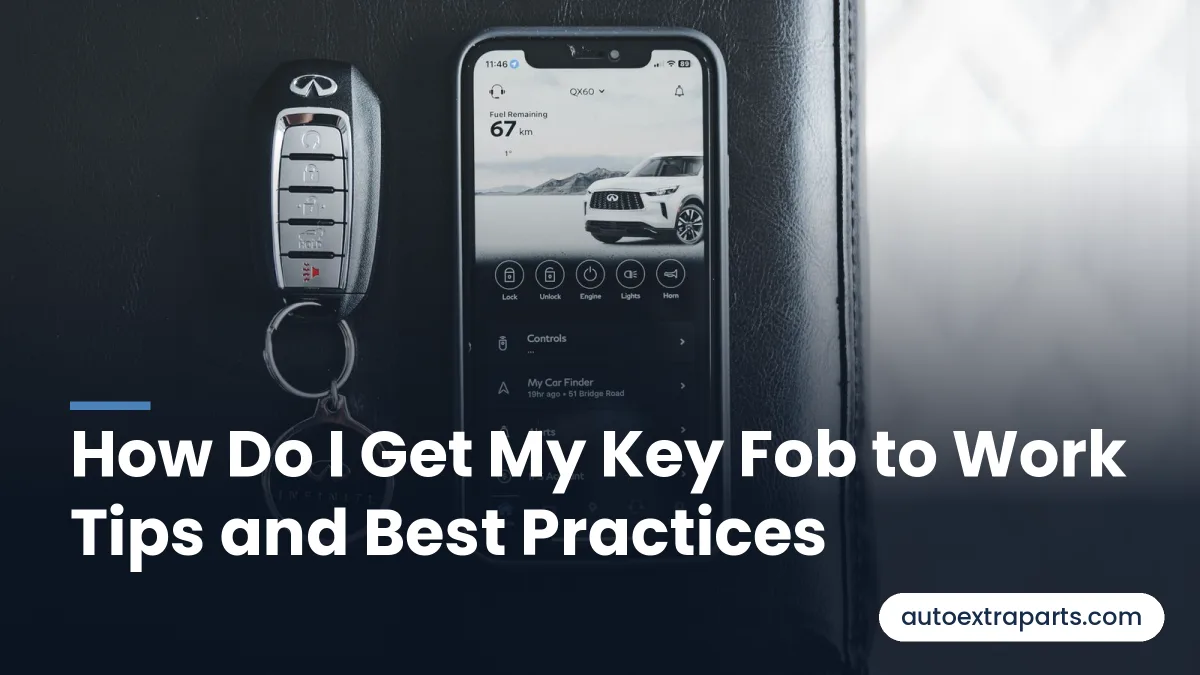
How Do I Get My Key Fob to Work Tips and Best Practices
As an Amazon Associate we earn from qualifying purchases. Guides are for general information; always check your owner's manual and consult a qualified mechanic when unsure.
Your key fob stops working on a bad day. When it comes to How Do I Get My Key Fob to Work, having steady, tested guidance makes all the difference. You stand by the car, pressing the button. Nothing happens. That moment feels frustrating and stuck. We have all been there. This guide helps you fix it fast.
You will learn to spot the real cause. We cover power, signal, and damage. You will know when to swap a battery. You will know when to re-sync the fob. You will save time and money. Let us get your fob working again. Always follow official safety and maintenance guidelines for best results.
Diagnose the Failure: Is It Power, Signal, or Mechanical?
Start with the simple checks first. A dead battery causes most fob failures. But signal noise can block your command too. A broken key blade adds a third path. You need to find the right path. Each path needs a different fix. Guessing wastes time and batteries. A few quick tests point you to the right answer. You can do all of them at home.
- Battery Test: Use a multimeter to check voltage.
- Signal Check: Stand near the car and press the button.
- Physical Damage: Look for cracks or a stuck key blade.
- Interference Scan: Note if other remotes work nearby.
Think of your fob like a TV remote. A weak battery gives a dim signal. A loud room full of Wi-Fi can drown it out. A cracked case can break the circuit inside. Each problem has a clear sign. You just need to look for it. Start here, and you will save a trip to the dealer.
Practical Methods for How Do I Get My Key Fob to Work: Battery Replacement and Signal Recovery
Replacing the battery is the first step. Most fobs use a CR2032 coin cell. You can buy one at any store. The process is simple and fast. You will need a small flathead screwdriver. Work on a soft surface to avoid scratches.
Pop open the back cover with care. Remove the old battery. Note the positive side facing up. Insert the new battery the same way. Snap the cover back into place. This fix works for most power issues.
- CR2032 Swap: Match the battery type to your fob manual.
- Signal Reset: Hold the unlock button for five seconds.
- Antenna Check: Press the fob close to the car antenna.
- Fresh Cells: Avoid cheap off-brand batteries for trust.
Signal recovery often follows a new battery. The fob needs to talk to the car again. You may need to re-sync it. We cover that in the next section. For now, a fresh battery solves the most common problem. It is the first thing to try. Do not skip this step even if the light still glows.
Re-Sync and Re-Program Your Fob Without Visiting the Dealer
Many people fear the re-sync process. They think it requires a dealer visit. That is not always true. Most car makers built a simple re-sync method into the system. You can do it yourself with the key in the ignition.
The steps vary by brand and year. You will find them in the owner’s manual. We give you the common path below. It works for many makes and models.
- Ignition On: Turn the key to the run position.
- Button Press: Press lock or unlock on the fob.
- Cycle Key: Turn the key off and back on fast.
- Confirm Sync: Listen for a click or dash light.
How do I get my key fob to work after a dead battery? Re-sync is the answer. A new battery does not always restore the link. The car and fob need to re-learn each other. This process clears old pairing data. It sets up a fresh connection. You will hear a sound or see a light. That tells you the sync worked. Try it before you book a service call.
When to Suspect Interference, Water Damage, or a Dead Transponder Chip
Sometimes the fob has power but still fails. The car does not see it at all. This points to signal interference or water harm. A dead transponder chip is another cause. Each one needs a different fix.
You must read the signs carefully. Interference comes from other radio signals. Water can short the circuit board inside. A broken transponder means the fob is dead for good. Let us look at each problem in detail.
- Signal Noise: Keep the fob away from phones and laptops.
- Water Test: Dry the fob fully if it got wet.
- Transponder Check: Hold the fob to the start button.
- Range Drop: Note if the fob only works very close.
A signal booster can help with interference. It amplifies the fob’s radio wave. You plug it into the car’s power port. This helps when the fob is deep in a bag. Water damage often needs a full fob spare.
The chip inside can not dry out safely. A dead transponder chip means the fob can not start the car. The engine immobilizer locks the system. You will need a new fob in this case. Spot the problem early to save time.
Aftermarket Fobs, Universal Remotes, and Compatibility Pitfalls
Not all key fobs are made the same. Aftermarket remotes can save you money. But they can also cause big headaches. A cheap fob may not match your car’s security setup. You might find that the fob works but the car won’t start.
That happens often with older models. The transponder chip inside must match the car’s immobilizer. A mismatch means no spark. No spark means no go. For complementary picks and expert testing advice, see our guide on How Much Commission Do Car Salesmen Get? For Beginners.
Universal remotes add another layer of guesswork. They claim to fit many cars. But fit does not mean full function. You may get lock and unlock only. The remote might skip the trunk release.
It might not arm the alarm. Some universal units need a pro to set them up. Others let you self-program with a simple sequence. Read the fine print before you buy. Know what your car needs first.
- Transponder Match: The chip ID must align with your car’s immobilizer system.
- Frequency Check: Most cars use 315 MHz or 433 MHz. Match the remote to the right band.
- Cut-and-Program Cost: A locksmith can cut. Program a blank fob for less than a dealer.
- Warranty Gap: Aftermarket fobs often lack full dealer warranty support.
When you ask how do I get my key fob to work with a new remote, the answer starts with fit. You must match the make, year, and model. A wrong remote will not learn your car’s code. Some shops will try to force a fit. That wastes your time and money. Stick with a part number lookup first.
Aftermarket fobs work best when you buy from a known brand. Look for units with clear return policies. Avoid no-name sellers on big marketplaces. A good remote should come with clear setup steps. If the guide is vague, skip it. Your car’s security is not worth the gamble.
Preventive Maintenance and Long-Term Fob Health
A little care keeps your fob working for years. You do not need special tools. Just a few simple habits. Clean the contacts now and then. A loose battery connection causes many failures. Wipe the contacts with a dry cloth. Push the battery in firmly until it clicks. A snug fit stops random signal drops.
Store your fob away from strong magnets. Magnets can mess with the internal chip. Keep it out of direct sun too. High heat melts the plastic shell. It can also drain the battery fast. A cool, dry spot is best. Your key bowl on a hook works fine. Just keep it away from the stove.
- Battery Schedule: Swap the battery every 2 to 3 years. Do not wait for a dead fob.
- Contact Cleaning: Use a dry cloth or a pencil eraser on the battery contacts.
- Spare Fob: Keep a backup fob in a safe place at home.
- Avoid Moisture: Never leave your fob in a wet coat pocket.
You can test your fob signal strength with a quick trick. Stand near your car and press the button. Walk away slowly until the signal stops. That range tells you a lot. A weak signal often points to a dying battery. Or it can mean a cracked circuit board inside. Catching a weak signal early saves you from a locked-out night.
Some owners store their fob next to a phone. That is not a great idea. Phone radio noise can slowly wear down the fob chip. Give your fob its own space. A small fabric pouch works well. It blocks dust and minor bumps. Simple steps like these make a big difference over time.
When Professional Help Is the Fastest Fix
Sometimes a DIY fix is not the answer. You try the battery. You try the re-sync steps. Nothing works. That is when you call a pro. A locksmith knows the hidden quirks of each model. They have the right tools and software. They can read your car’s error codes fast. This saves you hours of guessing.
Dealerships can also help. But they often cost more. You may wait days for an appointment. A mobile locksmith comes to you. They handle the programming on the spot. You get your fob working in under an hour. That is a huge time win. You also avoid towing fees if your fob fails at home.
- Lockout Service: A locksmith can open your car without damage if you lock keys inside.
- Fob Programming: Pros use dealer-level tools to pair new fobs to your car.
- Immobilizer Bypass: A bad transponder chip may need a special bypass setup.
- Wiring Repair: Damaged wiring inside the door or ignition needs a trained eye.
You should call a pro if your fob gets wet. Water inside the fob can short the board. You might dry it out. But the damage could linger. A pro can test the circuit and replace parts. They also handle lost key spares fast. You do not need to order a new set from the dealer. For complementary picks and expert testing advice, see our guide on How Does Parking Work in Houston? For Beginners.
Knowing when to stop DIY helps you save money. A pro fix costs more upfront. But it stops you from buying wrong parts. It also stops you from breaking things further. When in doubt, pick up the phone. A quick call to a locksmith can solve your problem in minutes.
How Do I Get My Key Fob to Work: Quick Reference Table
| Issue | DIY Fix | Pro Fix | Cost Range |
|---|---|---|---|
| Dead battery | Swap CR2032 battery | N/A | $2–$5 |
| Signal lost | Re-sync via dashboard steps | Reprogram at locksmith | $0–$75 |
| Fob wet or damaged | Dry and open to air | Board repair or replace | $15–$200 |
| Aftermarket fob mismatch | Return and match part # | Tech cuts and programs | $20–$100 |
| Immobilizer not reading chip | Reposition key blade | Dealer or locksmith scan | $50–$300 |
Frequently Asked Questions
Can I Use Any Cr2032 Battery in My Key Fob?
Most fobs use a standard CR2032 battery. But some brands need a specific brand or type. Check your owner’s manual first. A cheap off-brand battery may leak or die fast. Stick with a trusted name like Energizer or Duracell. That small step keeps your fob running steady.
How Do I Get My Key Fob to Work After a Dead Battery?
Replace the battery first. Then try the re-sync steps for your car model. Many cars need you to cycle the ignition. Some require you to press a hidden button on the fob. If the fob still fails, the old battery may have leaked and corroded the contacts. Clean the contacts with a dry cloth before you insert the new battery.
Will a Universal Remote Work for My Keyless Entry System?
It might, but only for basic lock and unlock. Universal remotes often skip extra features. You may lose trunk release or alarm arm. Check the remote’s list of supported vehicles first. Match the frequency and chip type. A mismatch will not damage your car. It just will not work.
How Long Does a Locksmith Take to Program a New Fob?
A skilled locksmith can program most fobs in 15 to 30 minutes. The time depends on your car’s security system. Older models take less time. Newer cars with advanced encryption take longer. You should call ahead and confirm the service matches your car.
What Should I Do If My Fob Gets Soaked in Water?
Take the battery out right away. Dry the fob with a soft cloth. Leave it in a dry spot for 24 hours. Do not use a hair dryer on high heat. Heat can melt the circuit board. If it still fails after drying, take it to a locksmith for a full check.
Final Thoughts and Next Steps
Getting your key fob working again is usually a simple fix. Start with the battery. Then check the signal and the sync steps. Most owners solve the problem in minutes at home. You do not need to panic when the fob stops working. Stay calm and follow the steps in order. A little patience goes a long way.
If the simple fixes do not help, call a pro. A locksmith can handle tough cases fast. They save you time and money over a dealer trip. Keep a spare fob in a safe place at home. That way you always have a backup ready. Taking care of your fob today keeps you driving tomorrow.



One Comment