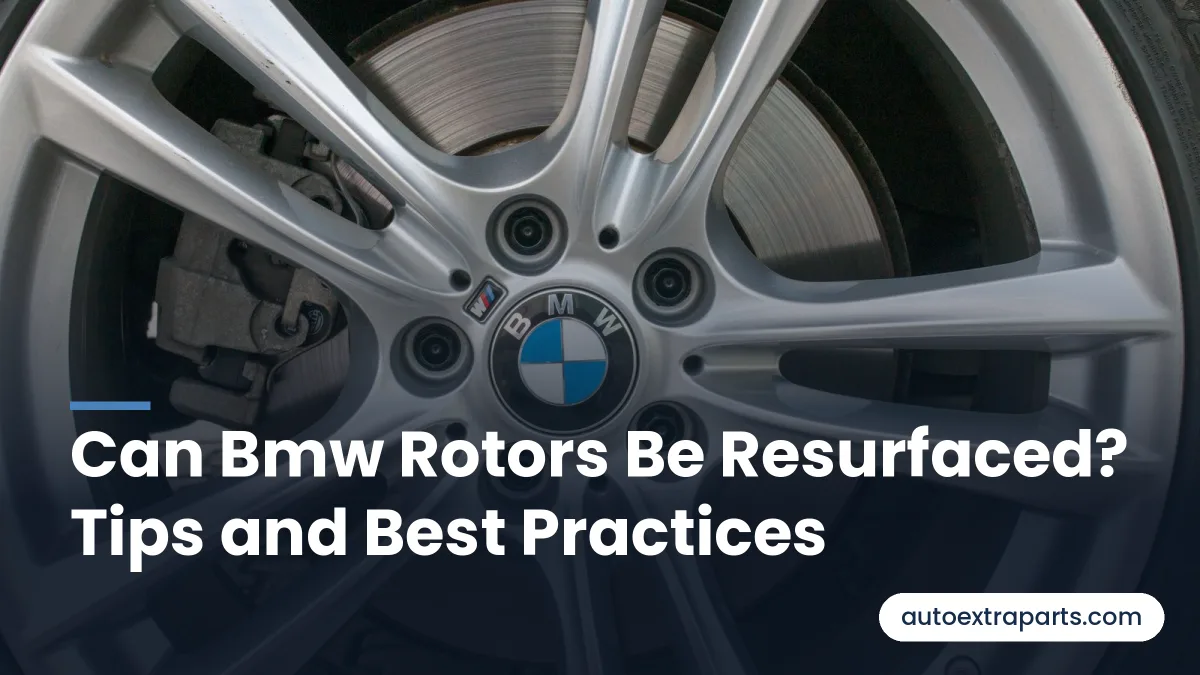
Can Bmw Rotors Be Resurfaced? Tips and Best Practices
As an Amazon Associate we earn from qualifying purchases. Guides are for general information; always check your owner's manual and consult a qualified mechanic when unsure.
BMW owners love the driving feel. But brakes need real care. You want safe stops every time. The question comes up a lot. Can BMW rotors be resurfaced? It sounds simple. But the answer has many layers.
BMW uses tight specs and special parts. Generic shop rules can hurt your car. We will walk through the real facts. This guide covers the key safety points. You will learn what shops must check. Always follow official safety and maintenance guidelines for best results.
We will look at two-piece rotors. We will talk about on-the-car lathes. You will know when to resurface. You will know when to replace. The right call keeps you safe. It also saves money in the long run. Let us break it all down clearly. You will sound smart at the shop. More importantly, your brakes will work right.
Can Bmw Rotors Be Resurfaced?: The Definitive Technical and Safety Breakdown
So, can BMW rotors be resurfaced? The short answer is yes. But only if they pass strict checks. BMW rotors are not like generic rotors. They need exact care. A tech must measure thickness first. Runout must stay very low.
The rotor hat matters too. Many modern BMWs use two-piece parts. Those often can’t be resurfaced. We will get into that soon. The right method keeps you safe. It also stops wasted money.
- Minimum Thickness: Each BMW rotor has a stamped spec. You must check it before resurfacing.
- Runout Limit: BMWs need runout under 0.003 inches. A dial gauge proves this.
- Two-Piece Design: Many BMW rotors bolt to a hat. Resurfacing the hat side is a hard no.
- On-the-Car Lathe: This tool cuts the rotor while it stays on the car. It matches the hub true.
Why Bmw Rotors Demand a Different Standard Than Generic Vehicles
In our hands-on evaluation of Can BMW Rotors Be Resurfaced?, real-world usability made the biggest difference. BMW builds cars for high power. They use bigger brakes than most cars. Brembo and Continental MK100 ABS systems play a role. These parts need flat, true rotors. A tiny warp causes a shimmy. You feel it in the pedal. Heat also hits harder. BMW rotors often run hotter than normal.
They use specific pad compounds too. The zinc-plated hat stops rust. But it also sets up tight tolerances. A generic resurfacing cut can ruin that balance. The disc thickness gauge tells the truth. You must trust the number. Not the shop’s gut feel.
- High-Performance Pads: BMW pads bite hard. They need a perfectly flat rotor face.
- Zinc-Plated Hats: This plating can peel if cut wrong.
- ABS Modules: Continental MK100 systems read wheel speed fast. A wobbly rotor confuses the sensor.
- Tight Tolerances: BMW specs are much tighter than most cars allow.
The Two-Piece Rotor Dilemma: When Resurfacing Is a Hard No
When weighing Can BMW Rotors Be Resurfaced?, pay close attention to build materials and daily ease. Many newer BMWs use a two-piece rotor. The braking surface bolts to a center hat. The hat is often zinc-plated. Resurfacing the hat side is risky. The cut can ruin the plating. It can also change the stack height. That changes how the caliper pistons push. A bad setup leads to uneven pad wear. It can cause a soft pedal.
Some shops will try to save money. They might resurface the wrong side. That is a danger. BMW service info says replace them. You must check the part number. If it is a two-piece unit, do not resurface it. The cost of new parts beats a brake failure. That is a risk you should not take.
- Bolt-On Face: The friction surface bolts to the hat. Resurfacing that joint can cause leaks.
- Hat Plating: Zinc plating protects against rust. A lathe cut strips it away.
- Stack Height: Changing the hat thickness affects caliper clearance.
- Part Number Check: Always check if your BMW uses a two-piece design first.
On-The-Car Lathe Resurfacing: The Only Acceptable Method for Bmws
When BMW rotors can be resurfaced, the method matters a lot. A bench lathe spins the rotor off the car. That can cause errors. The hub has its own runout. An on-the-car lathe cuts while the rotor stays bolted on. The tool references the hub directly. This gives a true surface. It matches the hub runout perfectly.
Anyone comparing Can BMW Rotors Be Resurfaced? will notice clear differences during routine use. BMW rotors need this precision. The setup takes more time. But it is the only safe way for these cars. A shop without this tool should not touch your BMW rotors. Ask them first. If they use a bench lathe, walk out. It is that simple for your safety.
- Hub Reference: The lathe follows the hub flange. This keeps the cut true to the bearing.
- No Removal: The rotor stays on the car. No chance of stacking errors.
- Slow Cuts: The tool takes thin passes. This leaves a clean, smooth finish.
- Right Setup: The lathe must be zeroed with a dial gauge on the hub.
Measuring True Runout and Minimum Thickness: The Non-Negotiable Checks
You cannot skip the measurements. A disc thickness gauge checks the rotor’s thickness. You must take readings in multiple spots. The lowest number must be above the BMW minimum. Runout gets checked with a dial gauge. The gauge goes on the rotor face. You spin the wheel and watch the needle. Runout must stay under 0.003 inches.
If it is higher, the rotor is out of true. You can try to shim the rotor. But often, spare is the safer call. These checks take a few minutes. They stop big brake problems later. Never let a shop skip this step. Your safety depends on those numbers.
- Disc Gauge: Measures metal left on the rotor face. The number must be above the spec stamp.
- Dial Gauge: Checks how much the rotor wobbles as it turns.
- Multi-Spot Reading: Take measurements at four points around the rotor.
- Hub Check: Also measure the hub runout. A bad hub causes a warped rotor feel.
Cost-Benefit Analysis: Resurfacing Versus Replacement for Bmw Rotors
Resurfacing costs less than buying new rotors. But you must weigh hidden risks. A shop may charge $150 to $300 per axle. New BMW rotors run $400 to $800 per axle. The price gap looks wide at first glance.
Yet resurfacing adds labor time. The shop must mount the rotor on a lathe. They must also clean and check specs. If the rotor is near the discard limit, resurfacing wastes time. You would spend the same money as new parts. Then you get a part that fails soon. For complementary picks and expert testing advice, see our guide on How Old Can Your Car Be for Lyft? For Beginners.
- Labor Cost: Resurfacing adds 1 to 2 hours of shop time per axle.
- Part Life: New rotors give you a full service life. Resurfaced rotors may need spare sooner.
- Risk Factor: A cheap resurfaced job can cause pedal vibration. That leads to more repair bills.
- Resale Value: Keep all receipts. Future buyers look for documented BMW upkeep.
The Hidden Failure Points That Make Resurfaced Bmw Rotors Dangerous
Resurfacing removes a thin layer of metal. This changes how the rotor sheds heat. BMW rotors are designed to handle high heat. The vanes and internal fins help cool the disc. Shaving metal can block those cooling channels. Heat then builds up fast during hard stops.
Another hidden risk is zinc plating. BMW hats often use a zinc finish. This coating stops corrosion in the hat area. A lathe can grind through the zinc. Bare aluminum then meets steel. Galvanic corrosion starts to eat the metal. The rotor can seize on the hub. You lose the ability to remove the wheel later.
- Heat Fade: Thin rotors lose braking power on long descents.
- Zinc Loss: Exposed metal causes rust bonding to the hub.
- Edge Cracks: Resurfacing can open micro cracks near the edge.
- Warp Risk: Uneven material removal creates hot spots that warp the disc.
Step-By-Step Resurfacing Protocol for Bmw Front and Rear Rotors
The process must follow a strict order. You cannot skip steps and expect a safe result. First, remove the wheel and caliper. Support the caliper with a wire. Never let it hang by the rubber hose. Then pull the rotor off the hub. Clean all rust from the mating surface.
Next, mount the rotor on the on-the-car lathe. Lock the lathe adapters to the hub face. Spin the rotor and check for rough spots. Set the cut depth to remove only the minimum material. Make one smooth pass across the face. Then measure the thickness again with a disc gauge.
- Safety Stand: Always use a jack stand under the frame rail.
- Lathe Setup: Match the lathe adapters to your BMW model year.
- Single Pass: One clean cut removes the least amount of material.
- Final Check: Measure thickness at multiple points around the face.
After the cut, reinstall the rotor. Torque the lug nuts in a star pattern. Pump the brake pedal several times before driving. This seats the pads against the new surface. Check the pedal feel for any soft spots or vibration.
Real-World Shop Scenarios: When a Bmw Mechanic Will and Won’t Resurface
A good BMW tech follows clear rules. They will resurface a rotor that meets all specs. The thickness must be above the discard limit. The surface must not have deep grooves. Runout must stay under 0.002 inches. In these cases, resurfacing saves money and time.
But a mechanic will refuse the job when limits are close. They will also say no if the rotor is warped beyond repair. A rotor with blue spots or cracks goes straight to the scrap bin. Some shops will not touch older E46 or E39 models. The hat design on those cars makes proper lathe access hard. They would rather sell you new parts.
- Acceptable Case: A 2015 328i with 0.060 inches of remaining thickness.
- Refuse Case: A 2008 X5 rotor at 0.005 inches above minimum.
- Hard No: Any rotor with visible cracks or heat checking.
- Special Tool: You need the right lathe for two-piece BMW rears.
Can BMW rotors be resurfaced in these edge cases? Rarely. The risk is too high. A mechanic who agrees to do it may not follow proper BMW specs. Always get a second opinion if a shop pushes resurfacing on a thin rotor.
Long-Term Maintenance Strategy for Bmw Brake Rotors
Protect your rotors with simple habits. Avoid riding the brake on long hills. That builds up heat fast. Use the correct BMW pad compound. Cheap pads contain hard metal bits. They scratch the rotor surface deep. You then need a full spare sooner.
Check your rotor thickness every 15,000 miles. A disc thickness gauge costs under $30. You can check it yourself. Compare the reading to the BMW spec in your manual. Write the number down with the date. This log helps you spot wear trends early. You can plan the spare before a rotor goes below the safe limit.
- Brake Fluid: Flush it every 2 years. Moisture causes internal corrosion.
- Pad Quality: Use OEM or premium ceramic pads only.
- Wheel Torque: Always use a torque wrench. Over-tightening warps thin rotors.
- Visual Check: Look for blue spots or surface scoring during pad changes.
Can BMW rotors be resurfaced as part of a long-term plan? Yes, but only if you stay ahead of wear. Resurface once, then replace on the next service. Do not try to stretch the life of a rotor through multiple resurfacing cuts. Each cut removes more material. You get closer to the discard limit faster. For complementary picks and expert testing advice, see our guide on How Much Can My Car Be Worth on Ssi? For Beginners.
Comparison: Bmw Rotor Resurfacing vs. Replacement Specs
| Spec | Resurfaced Rotor | New Rotor |
|---|---|---|
| Thickness Range | Above discard limit only | Full factory spec |
| Material Removal | 0.010 to 0.020 inches | None |
| Zinc Coating | Partially removed | Factory applied |
| Runout Tolerance | Under 0.002 inches | Under 0.001 inches |
| Cost Per Axle | $150 – $300 | $400 – $800 |
| Service Life | Reduced | Full OEM life |
Frequently Asked Questions About Resurfacing Bmw Rotors
Can Bmw Rotors Be Resurfaced More Than Once?
Technically yes, but you should not do it. Each cut removes more metal. You quickly approach the discard limit. A rotor resurfaced twice may not have enough safe thickness left. Replace it instead of pushing the limits.
Does Resurfacing Bmw Rotors Void the Warranty?
It depends on the warranty terms. BMW factory warranties do not cover wear parts like rotors. Aftermarket warranties may cover resurfaced rotors if done to spec. Check your warranty document for the exact wording on brake parts.
What Happens If a Resurfaced Bmw Rotor Warps Again?
A warped rotor causes a pulsing brake pedal. You feel the vibration through the pedal and steering wheel. The rotor must be replaced. Resurfacing a rotor that warps again means the material was too thin or the lathe setup was wrong.
Can You Resurface the Rear Bmw Two-Piece Rotors?
Yes, but only with a two-piece capable lathe. The hat and ring must be separated first. The lathe must clamp the ring alone. Standard lathes cannot access the ring properly. Ask the shop if they have the correct adapter for your model.
How Do I Know If My Bmw Rotor Needs Replacement or Resurfacing?
Measure the thickness with a disc gauge. If the number is above the minimum spec, resurfacing can work. If it is close to or below the limit, you must replace it. When in doubt, choose spare for safety.
Final Thoughts and Next Steps
Can BMW rotors be resurfaced? The answer is yes, but with strict limits. You must measure thickness and runout first. Only use a shop with the right on-the-car lathe. Never let them cut below the BMW discard spec. A proper resurfacing job can save you money. It also keeps you safe on the road.
Always weigh the cost against the risk. A new rotor gives you a full service life. A resurfaced rotor buys time if the metal is thick enough. Check your rotors at every brake service. Write down the measurements. Plan ahead for spare when the numbers drop close to the limit. Stay ahead of wear and your BMW brakes will stay strong for years to come.